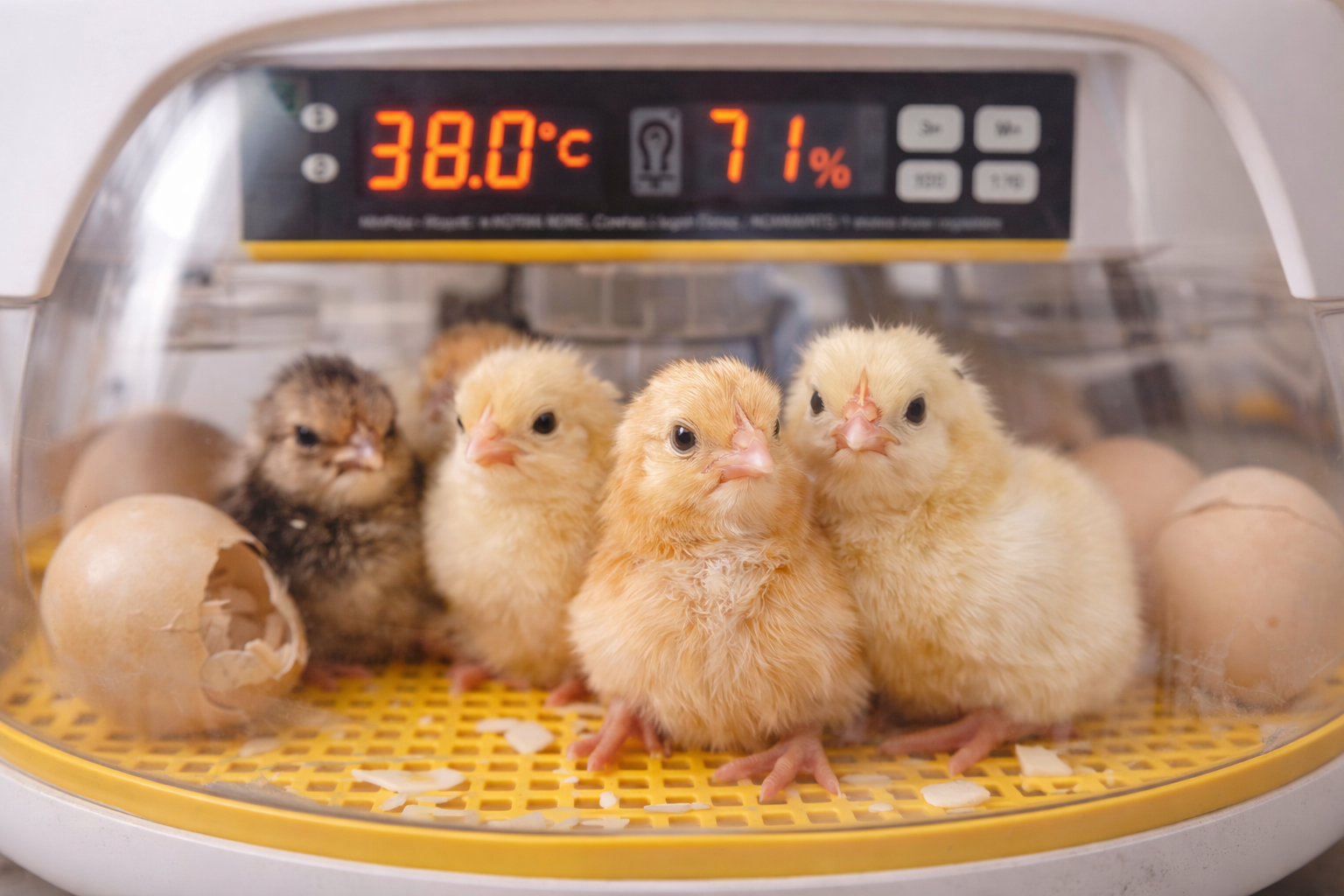
Raising your own chicks is one of the most rewarding experiences for chicken keepers. Watching eggs slowly develop and finally hatch into fluffy chicks is incredible.
But successful incubation requires the right temperature, humidity, and care.
This beginner-friendly guide explains everything you need to know about incubating hen eggs.
Choosing the Right Eggs
Not every egg will hatch.
For the best chance of success:
✔ Eggs must be fertilised (a cockerel must be present).
✔ Eggs should be clean but not washed.
✔ Use eggs that are no more than 7–10 days old.
✔ Avoid cracked, misshapen, or very dirty eggs.
Fresh, healthy eggs from strong hens produce the best chicks.
The Ideal Incubation Conditions
Chicken eggs require very specific conditions to develop.
Temperature
37.5°C (99.5°F) in a forced air incubator
Humidity
Days 1–18: around 45–50% humidity
Days 18–21 (lockdown): 65–70% humidity
Keeping temperature and humidity stable is critical for successful hatching.
Turning the Eggs
Eggs must be turned 3-5 times each day.
This prevents the embryo from sticking to the shell and helps healthy development.
If you are turning eggs manually:
Turn eggs at least 3–5 times daily
Stop turning on Day 18
Many modern incubators include automatic egg turners, which makes life much easier.
Candling the Eggs
Candling means shining a light through the egg to check development.
This is usually done around:
Day 7
Day 14
When candling you may see:
✔ Veins forming inside the egg
✔ A dark developing chick
✔ Movement as the chick grows
Clear eggs with no development can be removed.
Lockdown – The Final Stage
Day 18 marks the start of what chicken keepers call “lockdown.”
At this stage:
Stop turning the eggs
Increase humidity
Do not open the incubator unnecessarily
The chicks will position themselves ready to hatch.
Hatching Time (Day 21)
Around day 21, chicks begin to pip this means they crack the shell from inside.
This stage can take many hours, sometimes even a full day.
It’s important to:
✔ Avoid helping chicks hatch
✔ Keep humidity stable
✔ Let nature take its course
Once hatched, chicks will dry off and become fluffy inside the incubator.
Moving Chicks to the Brooder
After chicks are dry and active, they can move to a brooder box.
A brooder should include:
A safe heat source (around 35°C at first)
Chick starter feed
Fresh water
Non-slip bedding such as paper towel or wood shavings
Gradually reduce the heat each week as the chicks grow.
Final Thoughts
Incubating eggs requires patience, attention, and a little bit of luck. Even experienced poultry keepers don’t get a 100% hatch rate every time.
But when those tiny chicks finally hatch, the experience is incredibly rewarding.
For anyone keeping hens, raising chicks from eggs is something truly special.