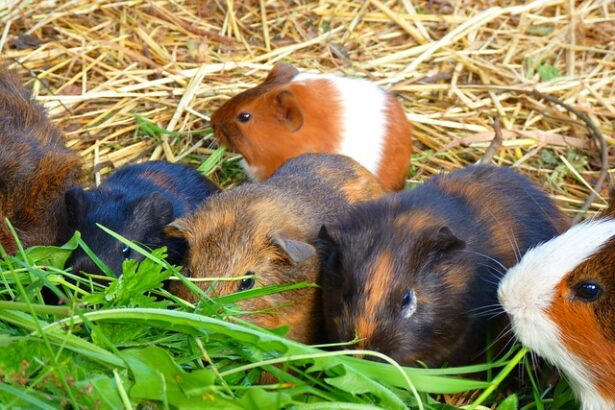
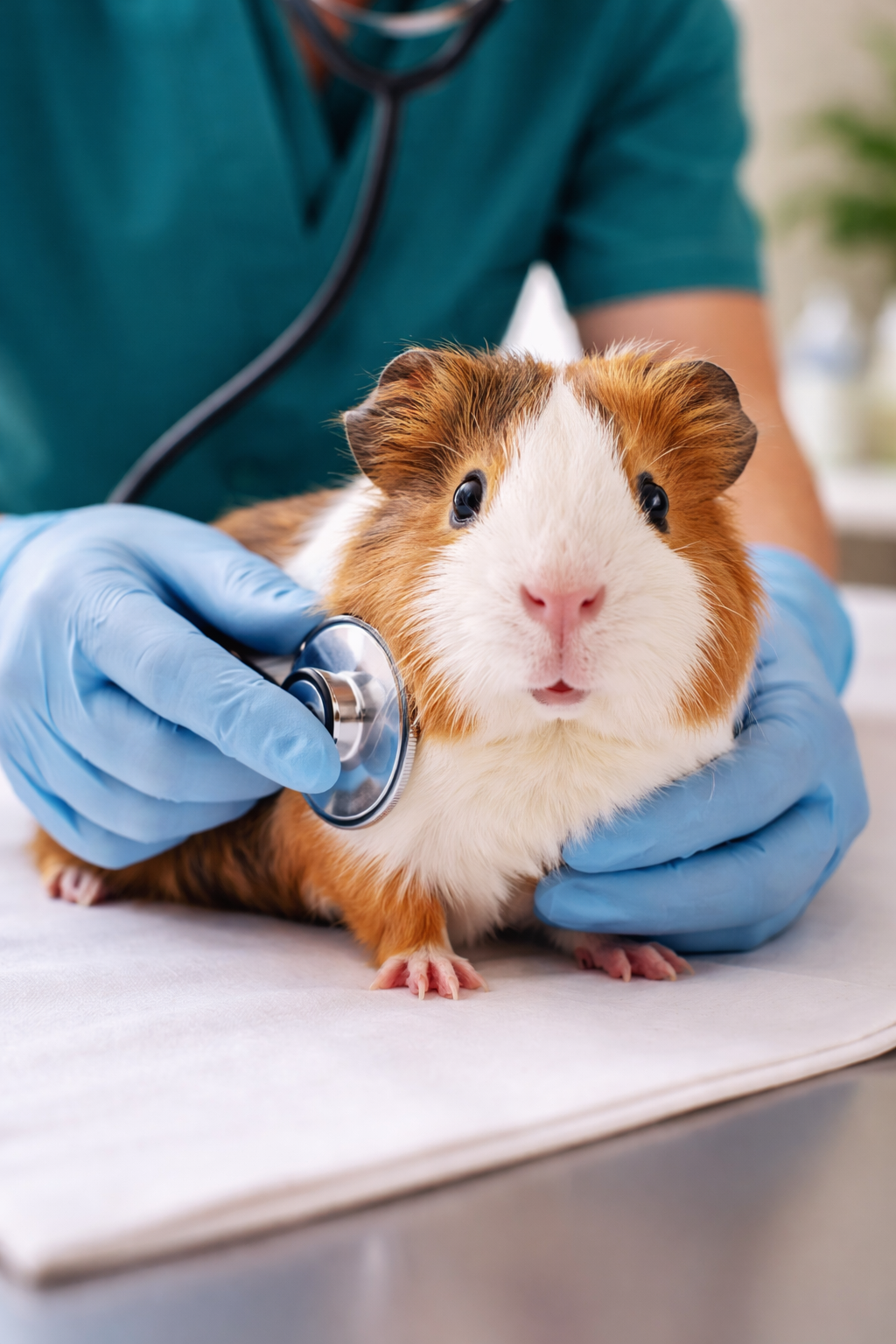
Guinea pigs are gentle, quiet animals and because they are prey animals, they often hide signs of illness. This means subtle changes in behaviour can be very important.
Spotting problems early can make a huge difference.
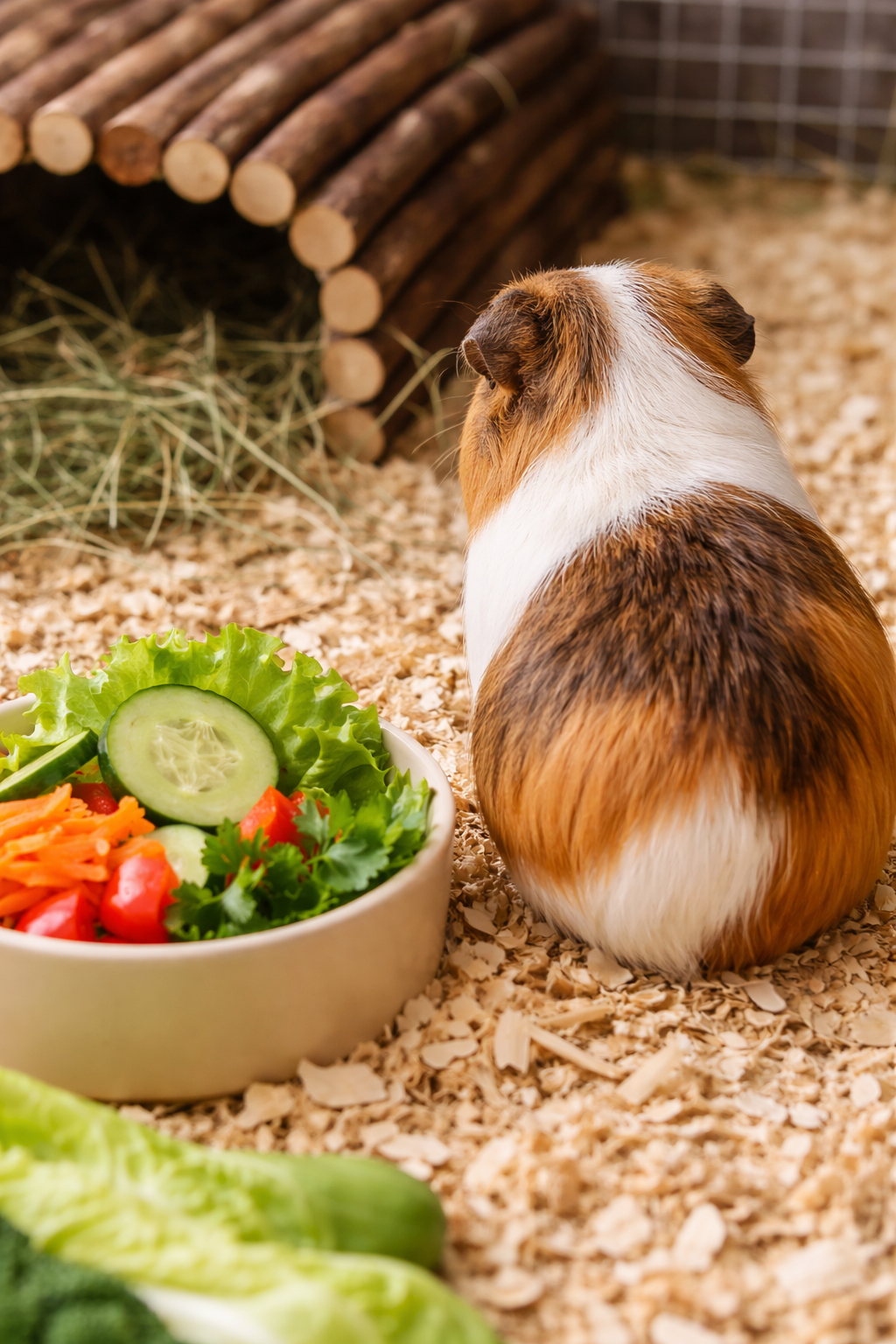
1. Loss of Appetite
One of the biggest red flags in guinea pigs is not eating.
If your guinea pig:
- Stops eating hay
- Leaves their favourite vegetables
- Shows little interest in food
This is urgent. Guinea pigs need constant food intake for their digestive system to function properly.
2. Lethargy or Hiding More Than Usual
Guinea pigs are naturally active, especially at feeding times.
If yours is:
- Sitting hunched
- Not responding normally
- Avoiding interaction
It may be a sign something isn’t right.
3. Changes in Eyes, Nose or Breathing
Watch for:
- Watery or crusty eyes
- Discharge from the nose
- Noisy breathing
- Sneezing frequently
These may indicate a respiratory infection, which needs vet attention quickly.
4. Changes in Droppings
Healthy guinea pig droppings are:
- Firm
- Oval-shaped
- Consistent in size
Very small, soft, or reduced droppings can signal digestive problems.
5. Weight Loss
Sudden weight loss is often one of the first signs of illness.
Weighing your guinea pig weekly is a simple way to monitor their health.
When to Contact a Vet
Seek veterinary advice immediately if your guinea pig:
- Stops eating
- Has breathing difficulties
- Has diarrhoea
- Appears weak or in pain
Guinea pigs can deteriorate quickly, so early action is always best.
❤️ Final Thoughts
You know your guinea pig best. Any sudden change in behaviour, appetite, or energy is worth paying attention to.
Being observant and proactive helps keep these gentle little animals safe and healthy.