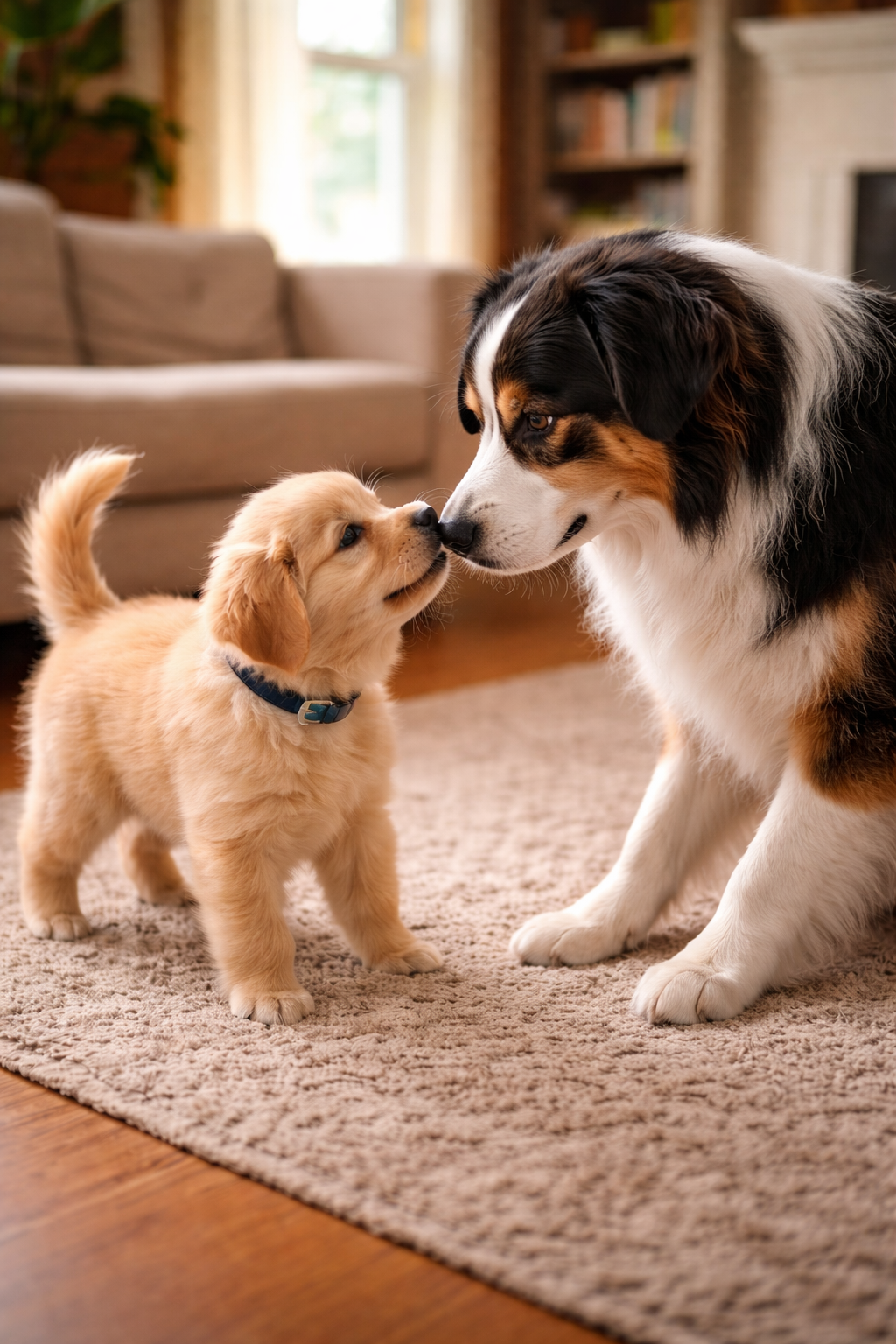
Bringing home a new puppy is exciting but when you already have a dog, it can also feel nerve‑wracking. Will they get along? Will your older dog feel pushed out? Have you done the right thing?
The good news? With the right preparation, most dogs adjust beautifully. This guide walks you through exactly what to expect, how to prepare, and how to give both dogs the best possible start.
Before the Puppy Comes Home
Preparation makes all the difference.
Before your puppy arrives:
- Keep your existing dog’s routine the same (walks, meals, bedtime)
- Set up separate beds, bowls, and toys
- Decide on boundaries in advance (sofa rules, sleeping areas)
Dogs thrive on predictability. Keeping life familiar helps your existing dog feel secure.
First Introductions – Go Slow
The first meeting sets the tone.
Best practice:
- Introduce dogs on neutral ground if possible
- Keep both dogs on leads initially
- Stay calm — dogs read your energy
- Keep the first interaction short and positive
Sniffing, ignoring, or gentle curiosity are all good signs. Growling isn’t always bad it’s communication.
The First Few Days at Home
The early days are about management, not perfection.
Helpful tips:
- Supervise all interactions
- Use baby gates to give space
- Feed dogs separately
- Avoid forcing play or closeness
Let relationships develop naturally.
Preventing Jealousy & Regression
Your existing dog may:
Become clingy
Regress slightly in training
Seek extra reassurance
This is normal.
What helps:
- One‑on‑one time with each dog
- Praise your older dog for calm behaviour
- Reward positive interactions
Remember your older dog still needs to feel special.
Training & Boundaries
Puppies learn fast including bad habits.
Key rules:
- Train separately at first
- Reward calm behaviour around each other
- Keep routines consistent
- Avoid comparing progress
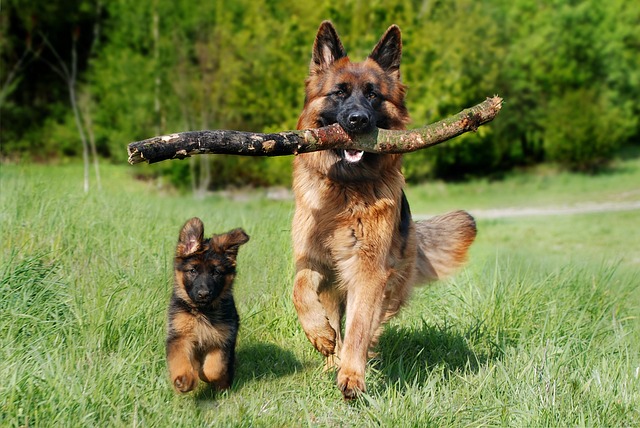
A calm older dog can become an excellent role model.
Common Concerns (and Reassurance)
Growling: Often normal boundary‑setting
Ignoring each other: Completely fine
Rough play: Supervise and interrupt if needed
Resource guarding: Manage with separation and training
If aggression feels intense or persistent, seek a qualified trainer early.
When It Clicks
Signs things are going well:
- Relaxed body language
- Shared space without tension
- Gentle play
- Sleeping nearby
Some dogs bond quickly. Others take weeks or months. Both are normal.
🐾 Final Thoughts
Adding a puppy to a home with an existing dog is a journey not a single moment. With patience, structure, and kindness, many households go on to enjoy beautiful lifelong bonds.
Go slow, trust the process, and remember: calm leadership from you makes all the difference.